Workability and retention
AMP-68 is developed for improved handling, trowellability and retention during application.
AMP-68 / Polymer raw material
Short pot life, difficult trowelling or a bond-strength target? AMP-68 is Razon’s polymer raw material for AAC jointing mortars and tile adhesives. Evaluate it with your cement and sand through laboratory trials.
Ordinary-additive vs AMP-68-enriched mortar, as reported by Razon. Test conditions are unspecified; validate your formulation.

Your application and performance target
Working time, handling and bonding each affect how an adhesive performs during installation. AMP-68 is Razon’s polymer raw material for developing AAC jointing mortars and tile adhesives. Choose the question closest to your formulation.
Evaluate AMP-68 in Razon’s published cement-and-sand starting formulation.
Razon positions AMP-68 for Type 1, 2 and 3 formulations; validate the complete adhesive.
Review the published handling comparison, then test AMP-68 with your materials.
Compare Razon’s published values and plan a laboratory trial for your application.
The suitable polymer dose depends on your actual materials and target application.
Ordinary mortar / AMP-68
For short working time, difficult trowelling or a strength target, review the corresponding property below. Razon’s six published comparisons cover handling, strength and cost. Establish the performance of your finished adhesive through a controlled laboratory comparison.
| Property | Ordinary additive | With AMP-68 |
|---|---|---|
| Pot life | 45 minutes | 2 hours |
| Trowellability | ++ | ++++ |
| Bond strengthN/mm² | 0.3–0.5 | >1 |
| Tensile strengthN/mm² | Up to 0.3 | Up to 1 |
| Compressive strengthN/mm² | Up to 3 | Up to 8 |
| Cost | ++++ | +++ |
Manufacturer-published values; test ages and conditions are unspecified. Plus signs are undefined qualitative ratings.
Comparison · CSVRazon identifies polymer quality, fineness, dosage, solubility, type and molecular weight as factors that influence the finished adhesive.
AMP-68 is developed for improved handling, trowellability and retention during application.
The published comparison reports two hours for AMP-68-enriched mortar against 45 minutes for ordinary-additive mortar.
Razon positions the polymer for improved bond and tensile strengths, hardness and toughness.
Evaluate cement consumption and raw-material cost alongside the performance requirements of the finished product.
Evaluate an AMP-68 sample with your own cement, sand and application requirements.
Cement + sand + AMP-68
AMP-68 is the polymer raw material in Razon’s cement-and-sand adhesive formulation. To evaluate it for your handling or strength requirements, start with these published proportions and run trials using your own materials.
Razon’s starting proportions. Adjust polymer dosage through lab trials with your cement and sand.
Formula · CSVMixing water, cement grade, sand specification and mixing procedure are not specified in the published formula. Establish these for your materials and intended application.
Polymer quality, fineness, solubility, type and molecular weight also affect the finished adhesive. Check workability, pot life and required strengths before production.
Discuss your materials and application before choosing the final polymer dosage.
AAC block jointing & tile adhesives

Develop a cement-and-sand jointing mortar around handling, working time and bonding.
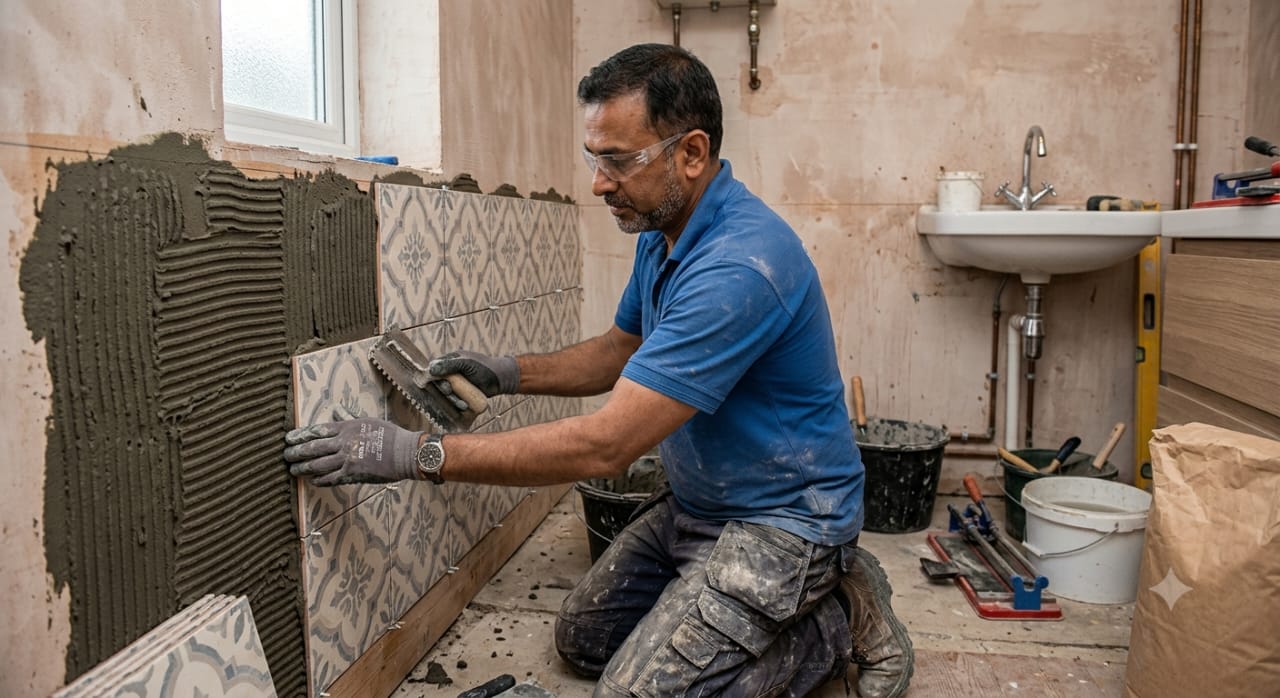
Establish the complete adhesive formulation for the intended tile type and installation.
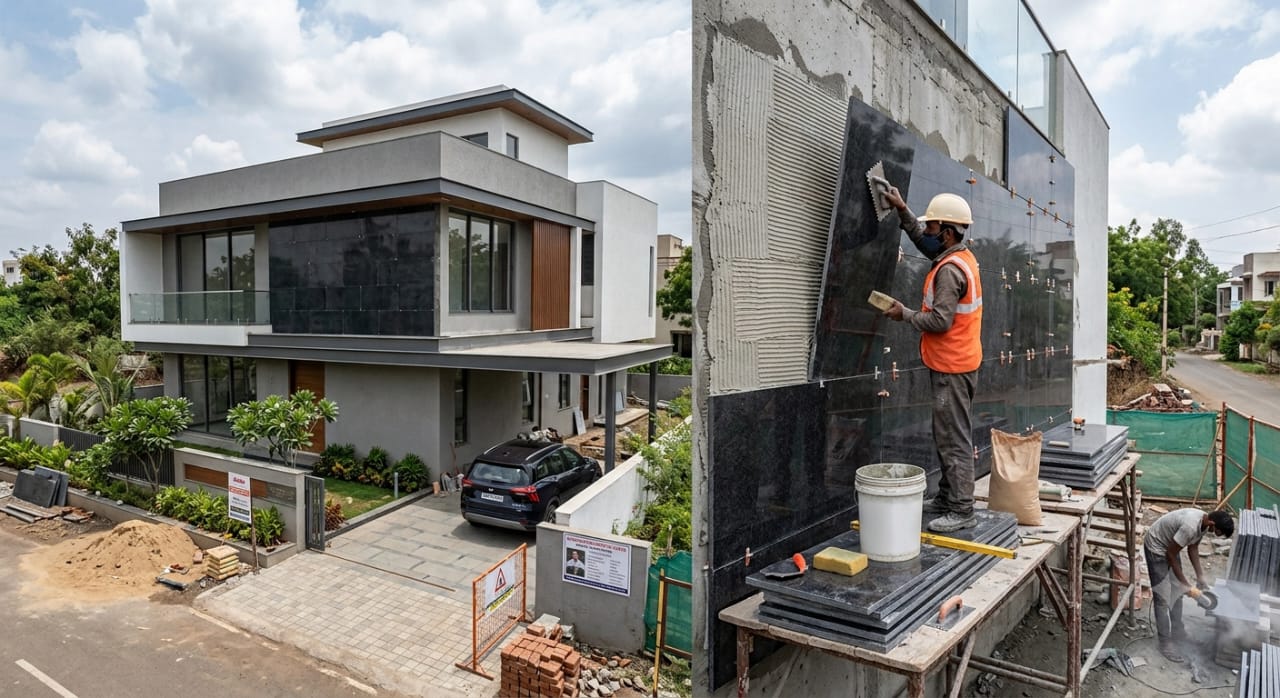
Validate the finished adhesive for its intended grade and application conditions.
Razon positions AMP-68 for Type 1, 2 and 3 tile adhesive formulations. Validate the complete adhesive against the applicable requirements of IS 15477:2019.
Images illustrate application contexts and are not evidence of AMP-68 performance.
Formulation development & supply
Define cement grade, sand specification, water demand and mixing procedure, then compare the handling and strength properties of your finished adhesive. Adjust the polymer dose through laboratory trials before production.
Razon describes AMP-68 as a raw material used by major manufacturers and SME plants across India. Discuss supply, inventory requirements and raw-material economics alongside the formulation.
Use the cement and sand planned for production so the trial represents your actual system.
Evaluate the published 20–40 kg starting range with the properties you need.
Confirm workability, pot life and the required strengths for the intended application.
Share your raw materials, application and the property you want to improve.
AMP-68 / before production
No. Razon presents AMP-68 as a polymer raw material used inside cement-and-sand AAC jointing and tile-adhesive formulations.
Treat it as a published starting formulation. The source does not specify mixing water, cement grade, sand specification or a complete mixing procedure.
The finished result depends on the cement, sand, water demand, mixing procedure and target application. Those variables are not fully fixed by the published starting formulation.
Razon publishes comparisons for pot life, trowellability, bond strength, tensile strength, compressive strength and cost. Test ages and full conditions are not supplied for the strength values, and the plus-sign ratings are undefined.
The current Razon page directs formulation enquiries to its contact channel. Share the application and raw-material system so the discussion can focus on the actual formulation.
Tell us about your materials and application. Razon can help with formulation enquiries, sample discussions and current commercial terms.
Choose how you’d like to get in touch.
info@razonengg.com